
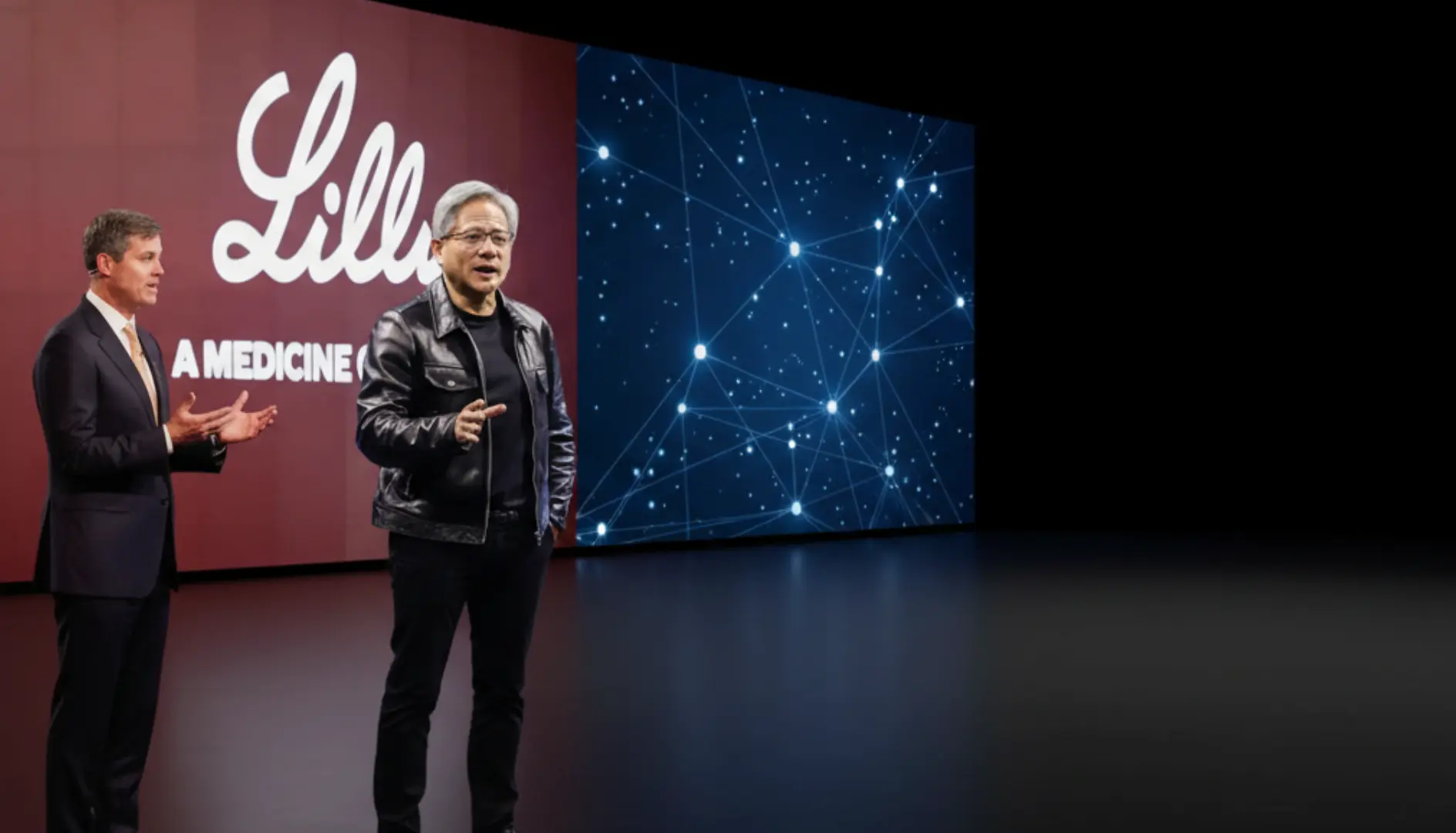
Eli Lilly and Nvidia unveiled plans Tuesday for the pharmaceutical realm’s beefiest supercomputer yet—a digital colossus designed to slash the decade-long slog of drug development into something resembling express checkout.
This unholy alliance of pills and processors aims to hurl AI at the thorny puzzle of curing ailments, trimming timelines from “eternal wait” to “hold my coffee.” Eli Lilly’s chief digital wizard, Diogo Rau, admits the full fireworks won’t dazzle until 2030, but hey, Rome wasn’t debugged in a day.
Eli Lilly’s top AI guru, Thomas Fuchs, dubs it a “novel scientific instrument”—think an enormous microscope on steroids, peering into biology’s hidden nooks without needing a nap. Scientists can now train AI on millions of experiments, spotting potential meds that humans might overlook while arguing over coffee breaks.
The real jackpot? Unearthing molecules no lone genius in a lab coat could dream up. Rau calls it the “big opportunity,” where AI plays matchmaker between chemistry and cures, potentially sparing us from another round of trial-and-error marathons.
But wait, there’s a collaborative kink: Enter Lilly TuneLab, the company’s fresh AI playground launched in September, stuffed with models trained on a billion bucks’ worth of proprietary data. Biotech startups get VIP access, trading their own research nuggets in a federated learning tango—no messy data swaps, just harmonious handshakes.
Nvidia’s healthcare honcho, Kimberly Powell, beams like a proud parent: “It’s like handing startups a turbo boost, skipping the capital-burning toddler phase.” In return, these pint-sized pioneers feed the beast, fattening the models for everyone’s gain.
While the supercomputer’s spooling up by December for a January debut, skeptics whisper that true payoffs lurk in the 2030 fog. No AI-born drugs grace shelves yet, but clinical trials are buzzing like a hive on energy drinks, fueled by fresh investments and pharma pacts.
Eli Lilly isn’t stopping at discovery; this beast will streamline development too, deploying AI agents to babysit researchers and sharpen medical imaging for disease-tracking wizardry. Biomarkers? They’ll pop like prairie dogs, paving the precision medicine highway—tailored treatments based on your genes, not guesswork.
Powell envisions a utopia: “Without this AI backbone, precision medicine’s just a pipe dream.” Eli Lilly’s the poster child, proving that when Big Pharma meets Big Tech, the only thing slower than drug approval might be the critics catching up.
Yet here’s the sly undercurrent: In an industry where a single flop can crater billions, this supertool bets on silicon smarts over stubborn synapses. Will it deliver elixirs by decade’s end, or just more hype hotter than a server farm sauna? One thing’s clear—patients might finally outpace the paperwork.
As the clock ticks toward launch, the sector watches with bated breath and upgraded hardware. If this pans out, forget 10-year hauls; we’re talking cures compiled in code, one gleeful iteration at a time.





Leave a Reply