
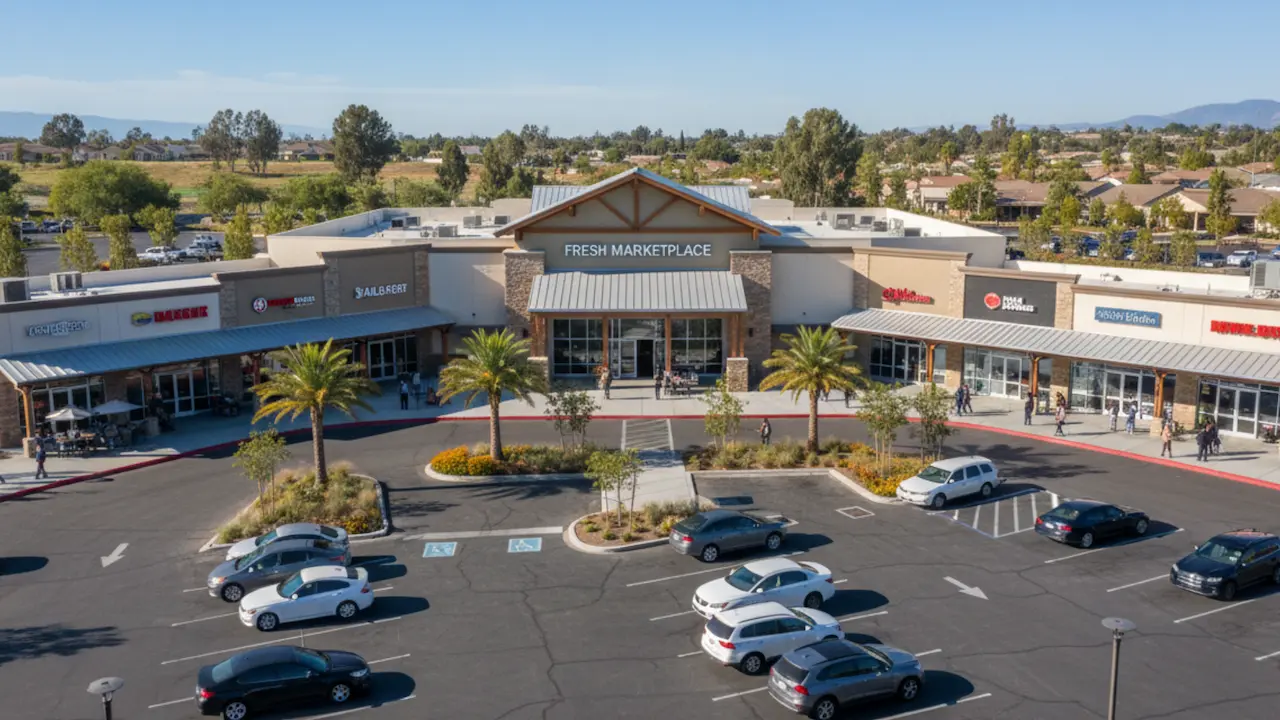
Chad Phillips, the global head of Nuveen Real Estate overseeing a casual $140 billion empire, has declared open-air grocery-anchored strip centers the unsung heroes of a battered retail world.
While e-commerce and pandemics played villain, these humble hubs—think CVS, pizza joints, and quick coffee fixes—emerged unscathed, boasting vacancy rates that dipped from 7.8% in 2016 to a smug 4.4% this year.
Phillips, with the steely gaze of a man who’s stared down economic apocalypses, leaned hard into these “resilient” spots over the last two years. “It survived COVID. It survived the Amazon effect,” he quipped, as if describing a superhero cape made of kevlar and kale smoothies.
Retail’s backstory reads like a cautionary tale from overzealous developers. The U.S. built like it was auditioning for a hoarding reality show, flooding the market until e-commerce crashed the party. Developers finally got the memo, dialing back the excess and birthing an undersupply sweeter than free samples at the deli counter.
“Cap rates are fairly attractive,” Phillips noted, his voice dripping with the understatement of a poker pro holding aces. Buyers snag these gems below replacement cost, churning out strong, risk-adjusted returns that make Wall Street suits swap ties for aprons.
But why skip the glitzy indoor malls, where foot traffic’s rebounding like a yo-yo on steroids? Phillips prefers these “bite-sized deals”—easy to chew, simpler to sell, and liquid enough to fund your next latte habit. Malls? They’re the clingy ex that won’t let go, tying up capital like a bad blind date.
Supply and demand waltz back into the spotlight. Fifteen years ago, real estate investors shoveled over 30% into retail, only to watch returns wilt like yesterday’s lettuce. Fast-forward: allocations plunged to 10%, but now, with profits perking up, eyes are swiveling like shoppers at a half-off sale.
Nuveen’s not just window-shopping. “We’ve raised $1.4 billion year-to-date for convenience-based retail, with leverage pushing buying power past $2.5 billion,” Phillips revealed, sounding like a kid unwrapping the biggest Lego set ever. Investors aren’t stampeding, but they’re peeking over the fence, wallets twitching.
Of course, no fairy tale skips the dragon. After five years of rent hikes and demand dashes, the sector’s catching its breath—vacancies nudged up for three quarters, per CoStar’s Brandon Svec, though they’re still lounging near historic lows. Rent growth? Stalled this year, the weakest in over a decade, as if the economy hit the snooze button.
Svec counters with a sly grin in his newsletter: little new space on the horizon means retailers are hustling for spots like it’s Black Friday in July. Availability’s tighter than a budget after holiday splurges, keeping the chase alive.
Yet shadows loom from consumer confidence’s game of hot potato. Will folks splurge on that manicure or stick to microwave meals? Phillips plays it smart, cherry-picking properties where households boast $100K-plus incomes and millennial brainiacs with savings buffers thicker than a double-crust pie.
Unemployment’s wild card? It spares the well-heeled, who treat these strips like a convenience buffet. “It’s about being in the path of that convenience,” Phillips mused, evoking visions of harried parents high-fiving over a one-stop errand empire.
Competition’s heating up, but deals still simmer at low double-digit returns, unmarred by construction booms that could flood the lot. Crowds flock reliably, drawn by the siren song of proximity—because nothing says “retail therapy” like dodging rain while grabbing groceries and gossip.
In this quirky comeback saga, Phillips’ strategy shines as the pint-sized powerhouse: resilient, rewarding, and refreshingly drama-free. As malls mourn their glory days, these strip centers sip victory lattes, proving that sometimes, the best real estate is the one right next door—close enough to smell the fresh-baked success.








Leave a Reply