
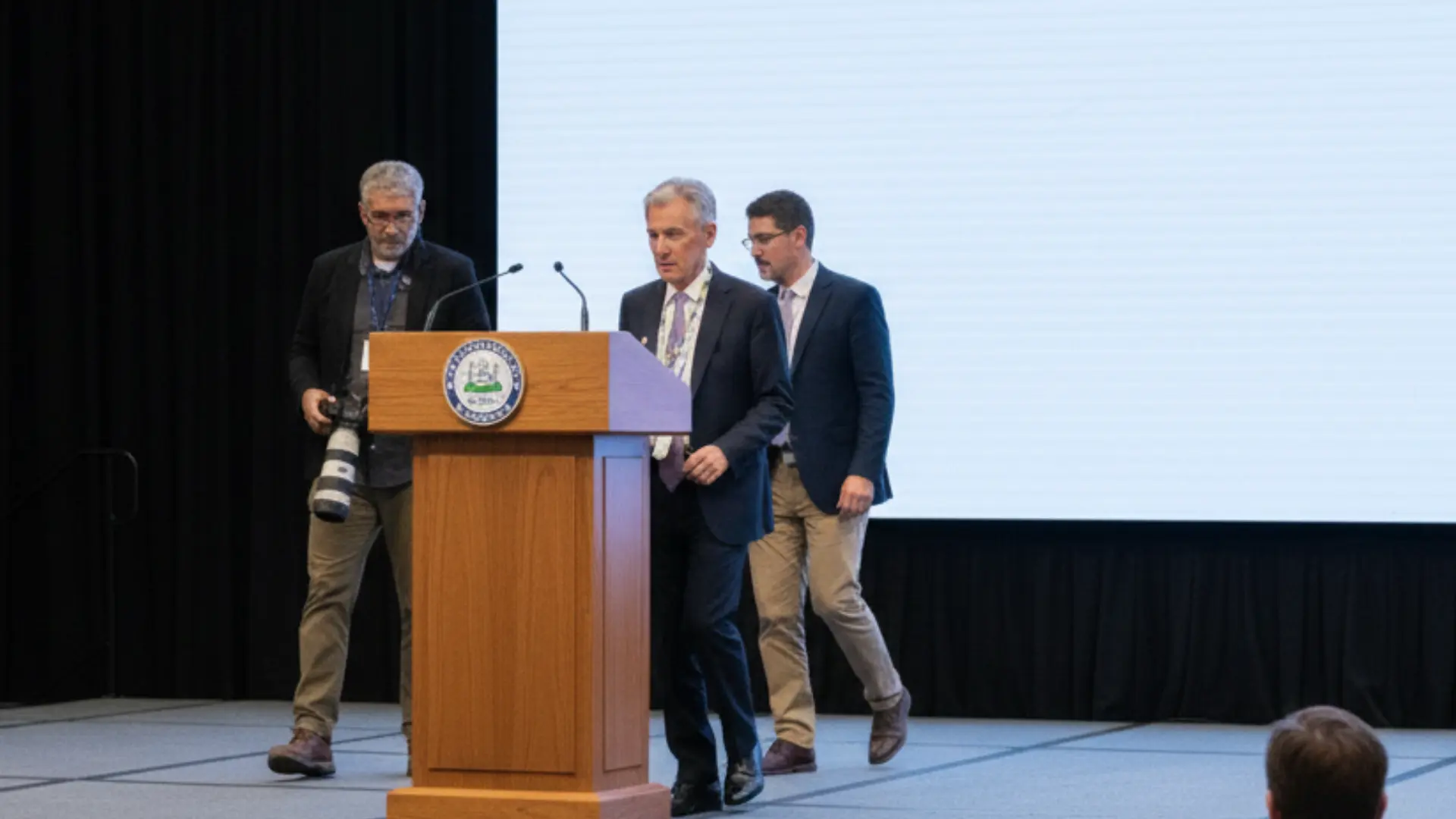
The Federal Reserve is set to trim its benchmark interest rate Wednesday, the second such slice this year aimed at jolting a dozing job market back to life.
Jerome Powell, the Fed’s unflappable chair, has all but promised this quarter-point dip from 4.1% to 3.9%, whispering sweet nothings to an economy that’s equal parts tech-fueled sprint and hiring-market nap.
Picture the U.S. economy as a quirky dinner guest: growth is robust thanks to tech titans dumping billions into AI wizardry, yet hiring has slowed to a crawl, like a sloth auditioning for a yoga retreat.
Inflation, that stubborn plus-one, lingers at elevated levels without spiking further—teasing the Fed with just enough cool-down to avoid a full-blown rate hike hangover.
But here’s the pickle: a government shutdown since October 1 has yanked away the Fed’s economic crystal ball. September’s jobs report? Postponed. October’s inflation stats? Maybe never compiled, leaving policymakers guessing like meteorologists during a solar eclipse.
Roughly 750,000 federal workers are staring down a paycheck-less month, a scenario that could turn consumer spending from engine to sputter. Add in layoffs from the Trump administration’s efficiency purge earlier this year, and next month’s jobs data might read like a bad breakup letter.
Powell, ever the diplomat, calls it a “low-hire, low-fire” job market—where folks cling to gigs like life rafts, but new openings are scarcer than honest politicians at a promise convention.
Unemployment nudged up to 4.3% in August, with monthly hires averaging a measly 29,000 over the prior quarter. It’s as if the economy’s whispering, “I’m not not hiring; I’m just very selective.”
Enter the shutdown’s ripple: if it drags on, it could crimp growth like a belt too tight after holiday feasts. Experts fret this “curious balance” might tip, with hiring either rebounding like a caffeinated squirrel or softening to match the sluggish vibe.
Kris Dawsey of D.E. Shaw likens the Fed’s bind to driving through a blizzard whiteout: you ease off the gas but stick to your lane, no wild swerves into the ditch of recession.
Powell echoes the unease, noting the labor market has “softened pretty considerably,” with downside risks rising faster than elevator music in a dentist’s office.
Yet inflation’s latest report—fashionably late by over a week—shows prices holding steady, not galloping. No need for higher rates to lasso it back, just a gentle nudge toward that neutral sweet spot where growth hums without overheating.
Christopher Waller, a Fed board member and rumored Powell successor shortlist star, puzzles over the mismatch: strong growth versus soft jobs means something’s got to give, like a rubber band stretched across economic ideologies.
Waller backs Wednesday’s cut but plays coy on December’s encore, urging caution until data flows again—assuming the shutdown doesn’t turn into a sequel nobody asked for.
Financial markets, ever the optimists, peg December odds at over 90% via CME FedWatch, betting Powell’s post-meeting quip will seal the deal.
Stephen Stanley of Santander wonders if recent wobbles are a true downturn or just an “air pocket”—that queasy drop on a smooth flight, leaving economists clutching their armrests.
Jonathan Pingle at UBS will earwig Powell’s presser for job-risk repeats, the verbal equivalent of a green light for more easing.
As the Fed tiptoes through this data desert, one thing’s clear: in an economy hooked on AI dreams and haunted by hiring hesitations, Wednesday’s cut is less a bold stroke than a hopeful pat on the back. Consumers might cheer cheaper mortgages—now at a friendlier 6.2%—but the real test is whether jobs wake up or hit snooze.






Leave a Reply