
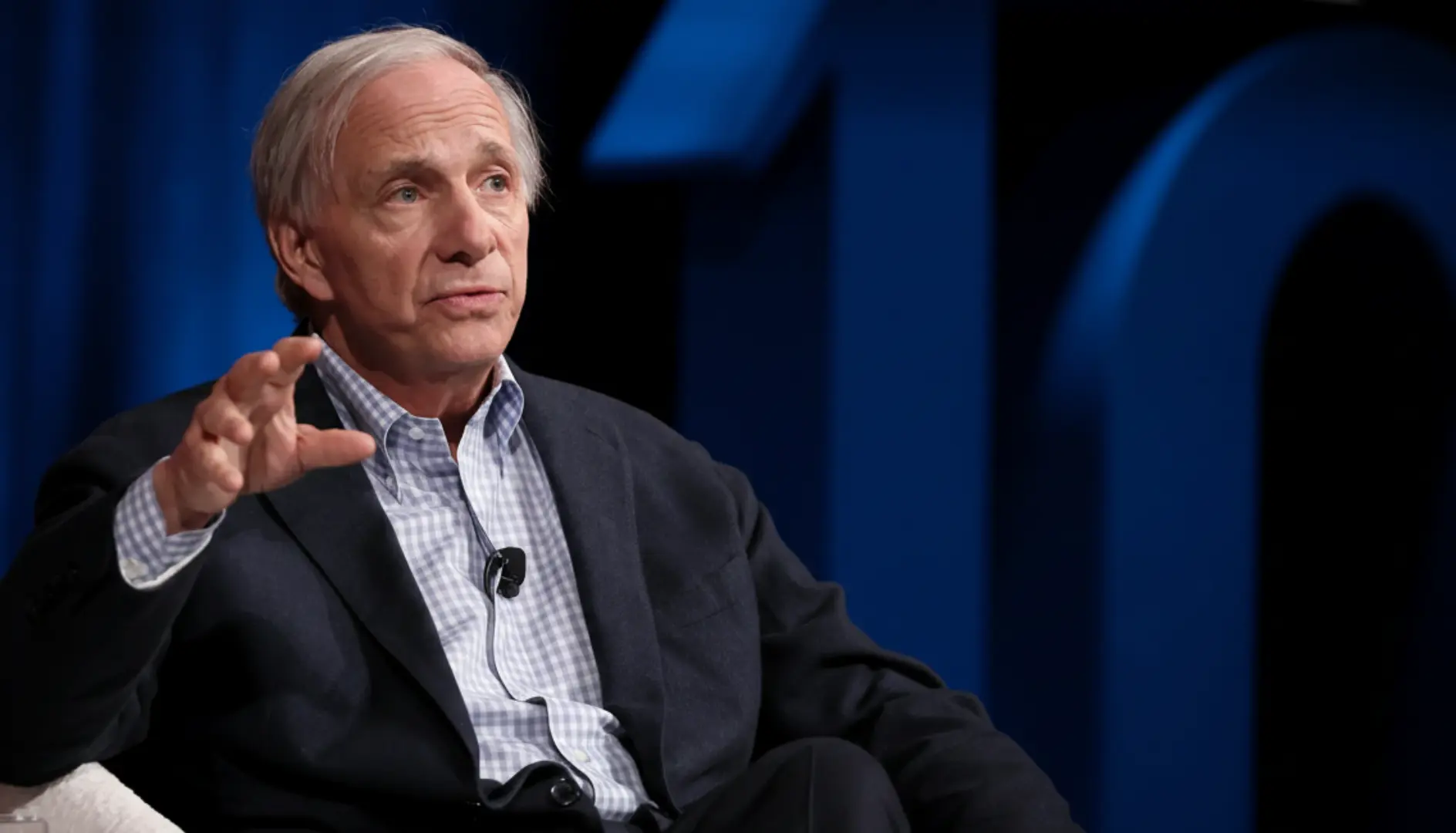
In the opulent halls of Riyadh’s Fortune Global Forum, where chandeliers outshine even the shiniest Bitcoin, hedge fund titan Ray Dalio issued a stark economic forecast that feels less like a warning and more like a polite reminder that the American dream now requires a reservation.
Picture the U.S. economy as a high-stakes poker game where the top 1% hold all the aces, raking in chips from Big Tech and finance wizardry, while the bottom 60% are left folding with a pair of deuces—mostly just hoping for a snack break.
Dalio, ever the straight shooter with a net worth that could buy a small country, didn’t mince words. He declared the economy can’t be viewed as one big happy family picnic anymore; it’s fractured into glittering penthouses for the elite and dimly lit basements for everyone else.
The top sliver—those 1% who treat algorithms like loyal butlers—drives nearly all the growth, feasting on rewards that would make a lottery winner blush. Even the next tier, the 5-10% strivers, get a seat at the table, nibbling on the appetizers of opportunity.
But descend below that, and it’s a different story. Dalio painted a portrait of the bottom 60% as increasingly sidelined spectators in the AI spectacle, their skills deemed “unproductive” not by malice, but by the relentless march of machine smarts that favor the brainy over the brawny.
This isn’t just a gap; it’s a canyon wider than the Grand one, with the underclass peering up at prosperity like kids nose-pressed against a candy store window—except the candy is stock options and the window is bulletproof.
To underscore the absurdity, Dalio trotted out a statistic that lands like a whoopee cushion at a funeral: about 60% of Americans read at a sixth-grade level or below. That’s right—folks who can tackle “See Spot Run” with flair but might need a decoder ring for the fine print on a mortgage.
In Dalio’s worldview, this isn’t mere trivia; it’s the economic equivalent of showing up to a quantum physics debate in flip-flops. Human capital, he insists, is the engine of productivity, and literacy is the spark plug—leaving a vast swath of the population revving in neutral while the elites zoom past in hypercars.
Enter AI, the uninvited guest who steals the show by amplifying the haves’ head start and handing the have-nots a participation trophy made of fool’s gold. Dalio argues it’s not democratizing jobs; it’s double-dipping the inequality sundae, scooping away low-skill gigs while supercharging the high-flyers.
The bottom 60% don’t just miss the boat—they watch it sail off with their luggage. Opportunities that once floated within reach now bob elusively on a sea of code, creating what Dalio calls “extreme dependency” on the productive few.
This lopsided load, he warns, injects fragility into the system like adding Jell-O to a Jenga tower. One wobble from the top, and the whole stack could quiver, sending economic tremors rippling down to the base.
So, what’s the fix? Dalio urges a “mechanical” approach to wealth redistribution—no fiery manifestos, just pragmatic plumbing to reroute some riches downward. Treat it like fixing a leaky faucet, not staging a revolution; ignore the dependent masses, and policymakers risk turning the economy into a house of cards built on caviar dreams.
In a nation that prides itself on pulling bootstraps, Dalio’s plea highlights how those bootstraps are increasingly made of silk for some and frayed twine for others. The elite’s engine roars on, but without a tune-up for the trailing pack, the road ahead looks more like a demolition derby than a victory lap.
As the forum’s echoes fade in Riyadh’s gilded glow, Dalio’s message lingers like an unpaid bar tab: America’s economic orchestra is tuning up for a symphony of the skilled, but without sheet music for the silent section, the performance might end in awkward silence—or worse, a cacophony of discontent.



Leave a Reply