
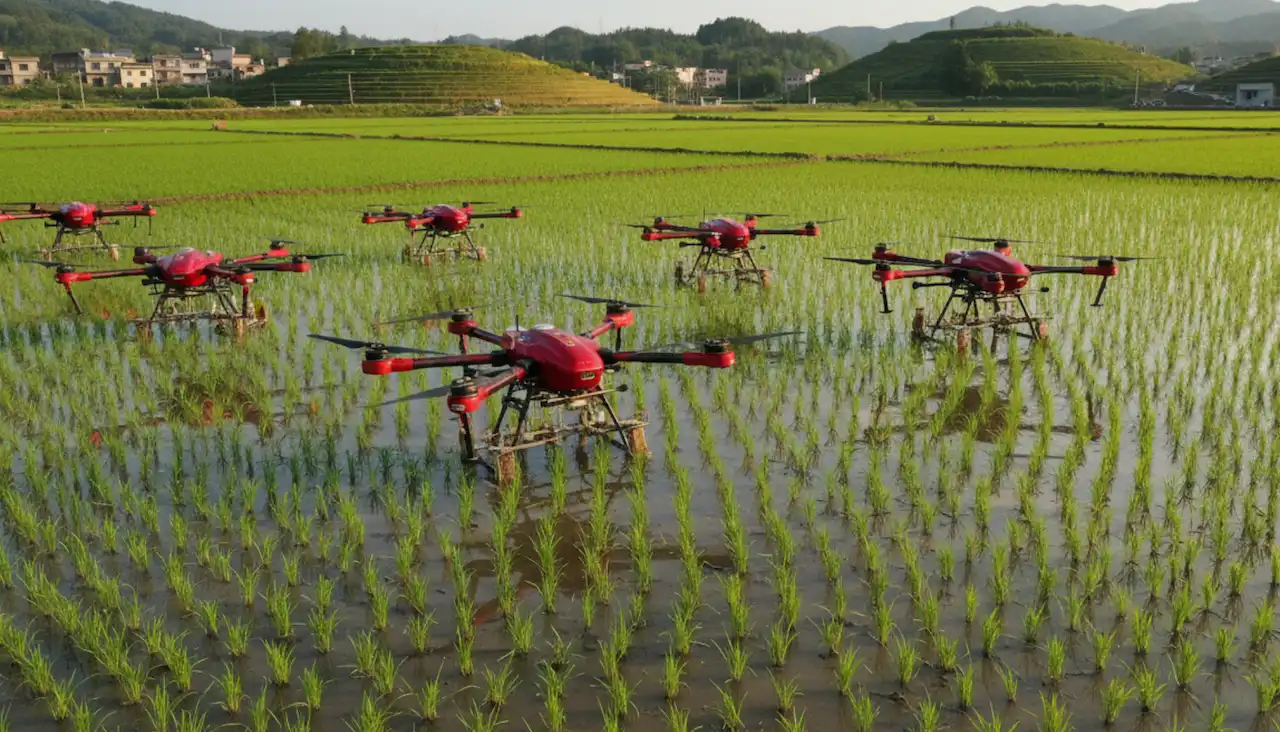
China’s ruling Communist Party has declared war on foreign tech dependencies—by vowing to crank up self-reliance in science and gadgets faster than a smartphone battery drains during a TikTok binge.
This comes hot on the heels of a four-day powwow that rubber-stamped a draft for the next five-year plan, because nothing says “profound changes” like plotting economic comebacks over tea and communiques.
The announcement, dropped via state media like a mic at a rap battle, paints a picture of a nation staring down “profound and complex” global curveballs with the steely gaze of a poker player holding a flush.
No direct shoutout to the elephant—or should we say, the tariff-toting pachyderm—in the room, but whispers of an upcoming Xi-Trump summit in South Korea next week suggest the diplomatic dance cards are filling up quicker than a Beijing traffic jam.
Economists Gary Ng from Natixis are nodding approvingly, calling it a vote of confidence in homegrown fixes that could make any DIY enthusiast proud. “External threats? Pfft, we’ve got policy tools sharper than a fresh-out-of-the-box cleaver,” the communique seems to wink, as if China’s leadership is one stimulus package away from turning uncertainty into a mildly annoying speed bump.
But hold onto your chopsticks— this isn’t some wild departure from the script. As Xin Sun from King’s College London quips in academic deadpan, it’s “much more continuity than change,” like a sequel where the hero wears the same trench coat but upgrades the gadget belt.
Echoing Xi Jinping’s grand vision of China as the world’s tech whisperer—with a side of military muscle that commands nods instead of side-eyes—the plan sketches a broad canvas of ambition without spilling the paint colors just yet.
Details? They’ll trickle out like slow-drip coffee, with the full blueprint not hitting the fan until March’s legislative love-fest gives it the obligatory thumbs-up. In the meantime, we’re left with teasers that scream “same game, higher stakes”: doubling down on tech independence, because who needs imported semiconductors when you can bootstrap your own from sheer willpower and state subsidies?
Fast-forward to the nitty-gritty, and it’s clear Beijing’s industrial fairy dust has already sprinkled magic on electric cars and wind farms, turning them from pipe dreams to parking-lot staples.
Now, the spotlight swings to robotics and AI, where China’s betting big that algorithms won’t ghost them like those elusive U.S. chips—because nothing says self-reliance like a robot that assembles itself while reciting Mao quotes.
The party pledges to “accelerate the all-out green transformation,” which sounds suspiciously like redecorating the entire economy in eco-friendly pastels. Imagine factories churning out solar panels so efficient, they’ll power your guilt-free Netflix binges while whispering sweet nothings about carbon neutrality.
On the consumer front, it’s all about juicing that domestic spending engine without overrevving it into a burnout. Subsidies for loans, kiddo daycare, and trade-ins for EVs and toasters are already in play, like a national coupon clipper’s paradise.
Economists are perched on the edge of their ergonomic chairs, hoping for end-of-year encores that could finally coax wallets out of hibernation mode.





Leave a Reply